A Complete Guide to Boost Workplace Productivity
In today’s fast-paced business environment, productivity and efficiency are crucial for organizational success. Companies that manage tasks effectively and maintain strong team coordination are more likely to achieve their goals and maintain a competitive edge. Task and team management plays a vital role in ensuring that employees work collaboratively, deadlines are met, and projects are completed successfully.
Task management focuses on organizing, prioritizing, and tracking work activities, while team management ensures that employees collaborate effectively and contribute to shared objectives. When these two elements work together, organizations can streamline operations, improve communication, and significantly boost workplace productivity.
Understanding Task Management
Task management refers to the process of planning, organizing, tracking, and completing individual tasks within a project or workflow. It involves breaking down large projects into manageable tasks, assigning responsibilities, setting deadlines, and monitoring progress.
Effective task management ensures that work is structured and employees understand their responsibilities clearly. It prevents confusion, reduces duplication of efforts, and helps organizations meet deadlines more efficiently.
In modern workplaces, task management is often supported by digital tools and software that allow managers to assign tasks, track progress, and monitor team performance in real time.
Understanding Team Management
Team management focuses on leading, guiding, and supporting employees to work collaboratively toward common goals. A strong team management strategy ensures that every team member understands their role and contributes effectively to the organization’s objectives.
Successful team management requires leadership, communication, motivation, and conflict resolution skills. Managers must create an environment where employees feel valued, engaged, and encouraged to share ideas and collaborate.
When teams are managed effectively, employees become more productive, innovative, and committed to achieving organizational success.
Importance of Task & Team Management in the Workplace
Task and team management are essential for maintaining efficiency and productivity in any organization. Without proper management systems, projects can become disorganized, deadlines may be missed, and employee performance may decline.
One of the primary benefits of effective management is improved productivity. When tasks are clearly defined and teams work together efficiently, projects are completed faster and with higher quality.
Another advantage is better communication. Team management encourages open communication between employees and managers, ensuring that everyone stays informed about project goals, responsibilities, and progress.
Additionally, task and team management help reduce workplace stress. When employees have clear instructions and well-defined roles, they can focus on their work without unnecessary confusion or pressure.
Key Elements of Effective Task Management
To maximize productivity, organizations should focus on several important aspects of task management.
Clear Task Planning
Successful task management begins with clear planning. Managers must identify project goals, break them into smaller tasks, and assign responsibilities to the appropriate team members.
Clear planning ensures that every task contributes to the overall project objective.
Prioritization of Work
Not all tasks have the same level of importance. Managers must prioritize tasks based on urgency, complexity, and business impact. Prioritization helps teams focus on the most critical activities first.
Deadline Management
Setting realistic deadlines is crucial for maintaining productivity. Deadlines create accountability and motivate employees to complete tasks on time.
However, unrealistic deadlines can lead to stress and reduced work quality, so managers must balance efficiency with practicality.
Progress Monitoring
Regular progress monitoring allows managers to track the completion of tasks and identify potential delays. Monitoring helps ensure that projects stay on schedule and that problems are addressed quickly.
Key Strategies for Successful Team Management
While task management focuses on individual work activities, team management focuses on building strong collaboration and motivation among employees.
Strong Leadership
Effective leaders inspire their teams and guide them toward achieving organizational goals. Leaders should provide clear direction, support employees, and encourage innovation.
Open Communication
Communication is the foundation of successful team management. Managers should encourage employees to share ideas, discuss challenges, and collaborate on solutions.
Transparent communication builds trust and strengthens team relationships.
Motivation and Recognition
Employees perform better when they feel appreciated and motivated. Recognizing employee achievements, providing constructive feedback, and offering growth opportunities can significantly improve team morale.
Conflict Resolution
Workplace conflicts are inevitable in any team environment. Effective managers must address conflicts promptly and fairly, ensuring that disagreements do not disrupt productivity or team harmony.
Role of Technology in Task & Team Management
Technology has revolutionized the way organizations manage tasks and teams. Digital tools allow managers to coordinate work more efficiently and track project progress in real time.
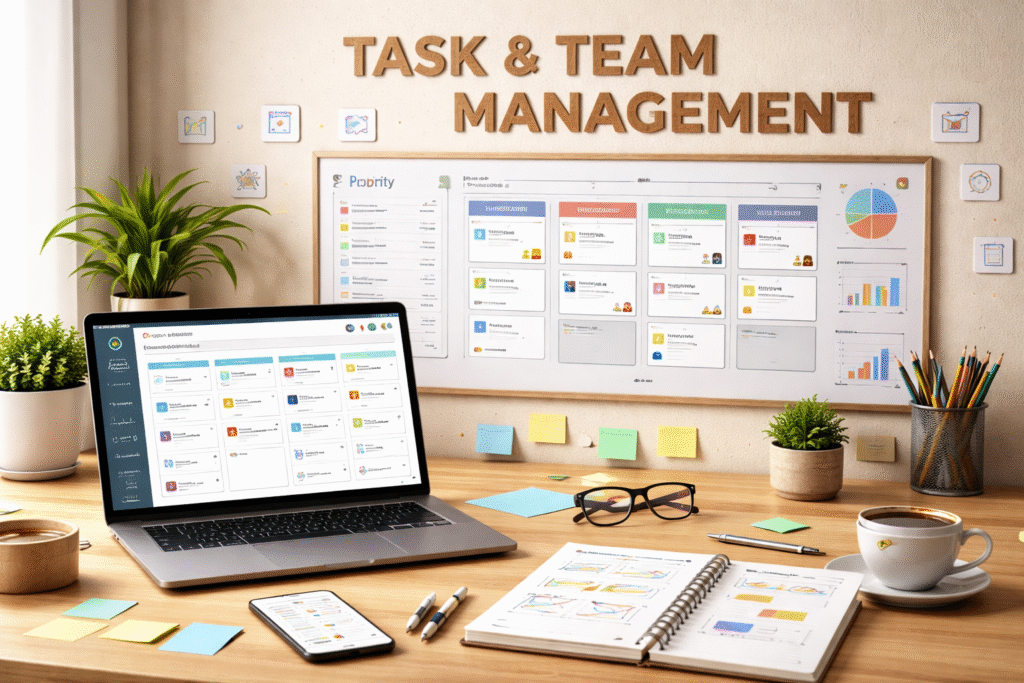
Task management software enables teams to create task lists, assign responsibilities, track deadlines, and monitor performance. These tools also improve communication by allowing employees to share updates and collaborate remotely.
In remote and hybrid work environments, technology has become even more important. Virtual collaboration platforms allow teams to communicate, share files, and manage projects regardless of their physical location.
Benefits of Effective Task & Team Management
Organizations that implement strong task and team management systems experience numerous benefits.
First, productivity increases because employees understand their roles and responsibilities clearly. This clarity reduces delays and improves work efficiency.
Second, teamwork improves as employees collaborate effectively and support each other in achieving shared goals.
Third, project success rates increase. When tasks are properly planned and teams are well-coordinated, projects are more likely to be completed on time and within budget.
Finally, employee satisfaction improves. A well-managed workplace reduces stress and provides employees with a sense of purpose and achievement.
Best Practices for Improving Workplace Productivity
Organizations looking to improve productivity through task and team management should consider the following best practices:
- Set clear goals and expectations for every project
- Assign tasks based on employee strengths and skills
- Encourage collaboration and open communication
- Provide regular feedback and performance evaluations
- Invest in modern task management tools and technologies
- Promote a positive and supportive work environment
By implementing these practices, organizations can create a productive workplace culture where employees work efficiently and feel motivated to contribute their best efforts.
Conclusion
Task and team management are fundamental components of workplace productivity and organizational success. By effectively planning tasks, prioritizing work, and fostering strong team collaboration, businesses can improve efficiency and achieve their strategic objectives.
Modern organizations must combine strong leadership, clear communication, and advanced technology to create an effective task and team management system. When employees understand their responsibilities and work together toward shared goals, productivity increases and organizations become more competitive in the marketplace.
Ultimately, businesses that prioritize effective task and team management build stronger teams, complete projects more efficiently, and create a positive work environment that drives long-term success.