
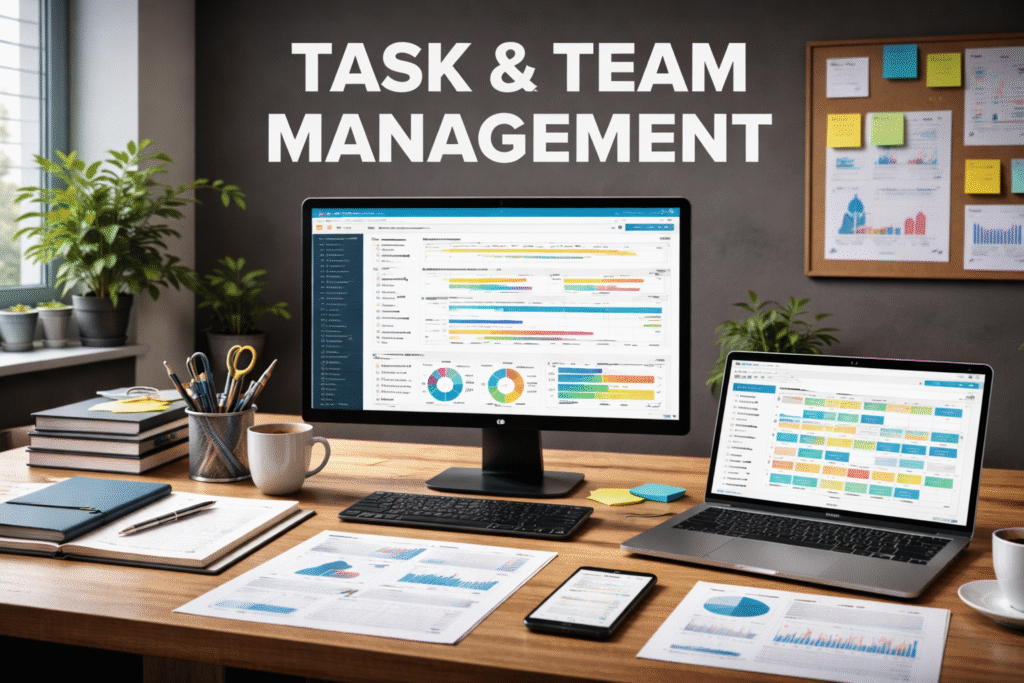
In 2026, task and team management have evolved far beyond simple to-do lists and basic supervision. With the rise of hybrid work models, digital collaboration, and performance-driven cultures, businesses must adopt smarter strategies to manage teams and workflows effectively. Efficient task and team management is now a cornerstone of productivity, employee satisfaction, and long-term business success.
Organizations that prioritize structured workflows, clear communication, and modern tools are better positioned to achieve their goals. Whether you are a startup founder, project manager, or corporate leader, understanding the latest strategies in task and team management is essential to stay competitive.
Understanding Task & Team Management
Task management involves planning, organizing, and tracking work to ensure timely completion. Team management focuses on coordinating people, resources, and communication to achieve common objectives. Together, they create a system that drives efficiency, accountability, and collaboration.
In 2026, successful management is not about micromanaging but empowering teams with clarity, autonomy, and the right tools.
Key Strategies for Efficient Workflow
1. Clear Goal Setting and Prioritization
Defining clear objectives is the first step toward efficient workflow management. Teams should work with well-defined goals, deadlines, and priorities. Using frameworks like SMART goals helps ensure tasks are specific, measurable, and achievable.
Prioritization techniques such as the Eisenhower Matrix allow teams to focus on high-impact tasks while minimizing time spent on low-value activities.
2. Adoption of Agile Methodologies
Agile practices have become mainstream across industries. By breaking tasks into smaller sprints and encouraging continuous feedback, teams can adapt quickly to changes and improve productivity.
Agile workflows promote collaboration, transparency, and faster delivery, making them ideal for dynamic work environments.
3. Leveraging Digital Tools and Technology
Modern task management relies heavily on digital platforms. Tools like Trello, Asana, and ClickUp help teams organize tasks, assign responsibilities, and track progress in real time.
Automation features in these tools reduce repetitive work, allowing teams to focus on strategic activities.
4. Effective Communication Systems
Communication is the backbone of team management. In 2026, businesses use integrated communication platforms like Slack and Microsoft Teams to ensure seamless interaction.
Clear communication reduces misunderstandings, improves collaboration, and keeps everyone aligned with project goals.
5. Time Management and Scheduling
Efficient scheduling ensures that tasks are completed within deadlines. Techniques such as time blocking and calendar management help individuals and teams allocate time effectively.
Managers should also ensure a balanced workload to prevent burnout and maintain productivity.
Building High-Performing Teams
1. Role Clarity and Accountability
Each team member should have clearly defined roles and responsibilities. This eliminates confusion and ensures accountability.
Assigning ownership of tasks encourages individuals to take responsibility and deliver quality work.
2. Encouraging Collaboration
Collaboration fosters creativity and innovation. Teams should be encouraged to share ideas, provide feedback, and work together to solve problems.
Collaborative environments lead to better decision-making and stronger team dynamics.
3. Continuous Learning and Development
In a rapidly changing work environment, continuous skill development is essential. Organizations should invest in training programs, workshops, and learning platforms to keep their teams updated.
Skilled employees contribute more effectively to organizational goals.
4. Performance Tracking and Feedback
Regular performance reviews and feedback sessions help identify strengths and areas for improvement.
Constructive feedback motivates employees and enhances overall team performance.
5. Employee Well-being and Engagement
A productive team is a happy team. Companies must prioritize employee well-being by promoting work-life balance, mental health support, and a positive work culture.
Engaged employees are more committed and productive.
Workflow Optimization Techniques
1. Process Standardization
Standardizing processes ensures consistency and efficiency. Documented workflows help teams follow best practices and reduce errors.
2. Automation of Repetitive Tasks
Automation tools streamline routine tasks such as data entry, reporting, and notifications. This saves time and improves accuracy.
3. Data-Driven Decision Making
Using analytics and performance metrics helps managers make informed decisions. Data insights can identify bottlenecks and optimize workflows.
4. Integration of Tools
Integrating different software platforms creates a unified workflow, reducing the need to switch between tools and improving efficiency.
Challenges in Task & Team Management
Despite advancements, organizations face challenges such as:
- Managing remote and hybrid teams
- Maintaining communication across time zones
- Handling workload imbalances
- Adapting to new technologies
- Ensuring data security
Addressing these challenges requires flexibility, strong leadership, and continuous improvement.
Future Trends in 2026
Task and team management continue to evolve with emerging trends:
- AI-Powered Management Tools: Artificial intelligence is being used to automate scheduling, predict project risks, and optimize workflows.
- Remote Work Optimization: Companies are adopting strategies to manage distributed teams effectively.
- Focus on Employee Experience: Organizations are prioritizing employee satisfaction and engagement.
- Advanced Collaboration Platforms: Enhanced tools are enabling seamless communication and project tracking.
- Outcome-Based Management: Businesses are shifting from time-based to results-driven performance evaluation.
Best Practices for Success
To achieve efficient workflow and productivity, organizations should:
- Set clear goals and expectations
- Use the right tools and technology
- Foster open communication
- Encourage teamwork and collaboration
- Continuously monitor and सुधार processes
- Invest in employee growth and well-being
Consistency in applying these practices leads to long-term success.
Conclusion
Task and team management in 2026 is about combining technology, strategy, and human-centric leadership. Efficient workflows are built on clear goals, structured processes, and collaborative environments. By leveraging modern tools like Trello, Asana, and Slack, businesses can streamline operations and enhance productivity.
Organizations that adapt to modern management practices will not only improve efficiency but also build stronger, more resilient teams. In a competitive landscape, effective task and team management is no longer optional—it is a necessity for growth and success.